



Mercury Direct RF solutions: Selecting Versal RF and RFSiP
TARGET TechNews · Updated
RF selection for radar and electronic-warfare programs starts with operating band, instantaneous bandwidth, channel architecture and integration format. Explore Mercury Versal RF and RFSiP approaches, AM9057/AM9058 tuner modules and the LAD-2150 display through their distinct roles in a system.
Four new and featured solutions
Evaluate Versal RF, RFSiP, AM9057/AM9058 and LAD-2150 by bandwidth, channel architecture, form factor and display requirements.
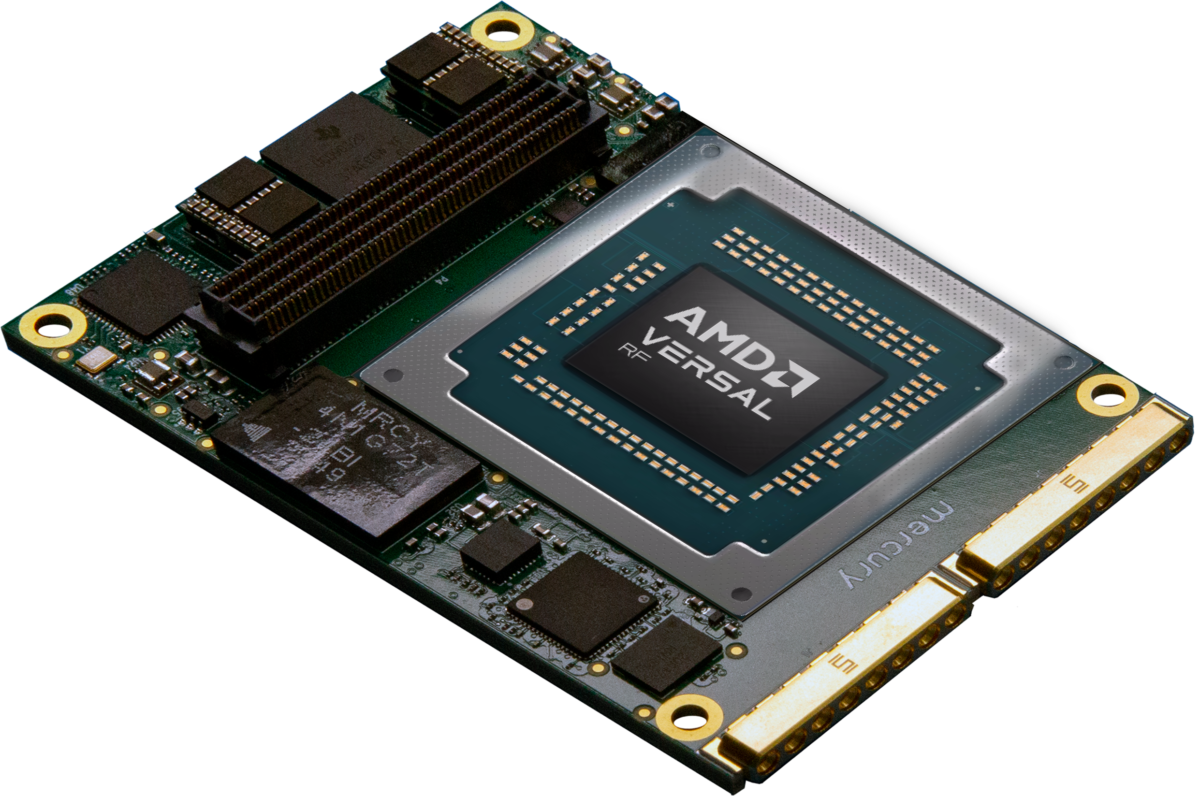
Versal RF Product Family
Mercury’s AMD Versal RF-based family offers SoM, small-form-factor and 3U OpenVPX options for direct wideband digitization and low-latency edge processing.
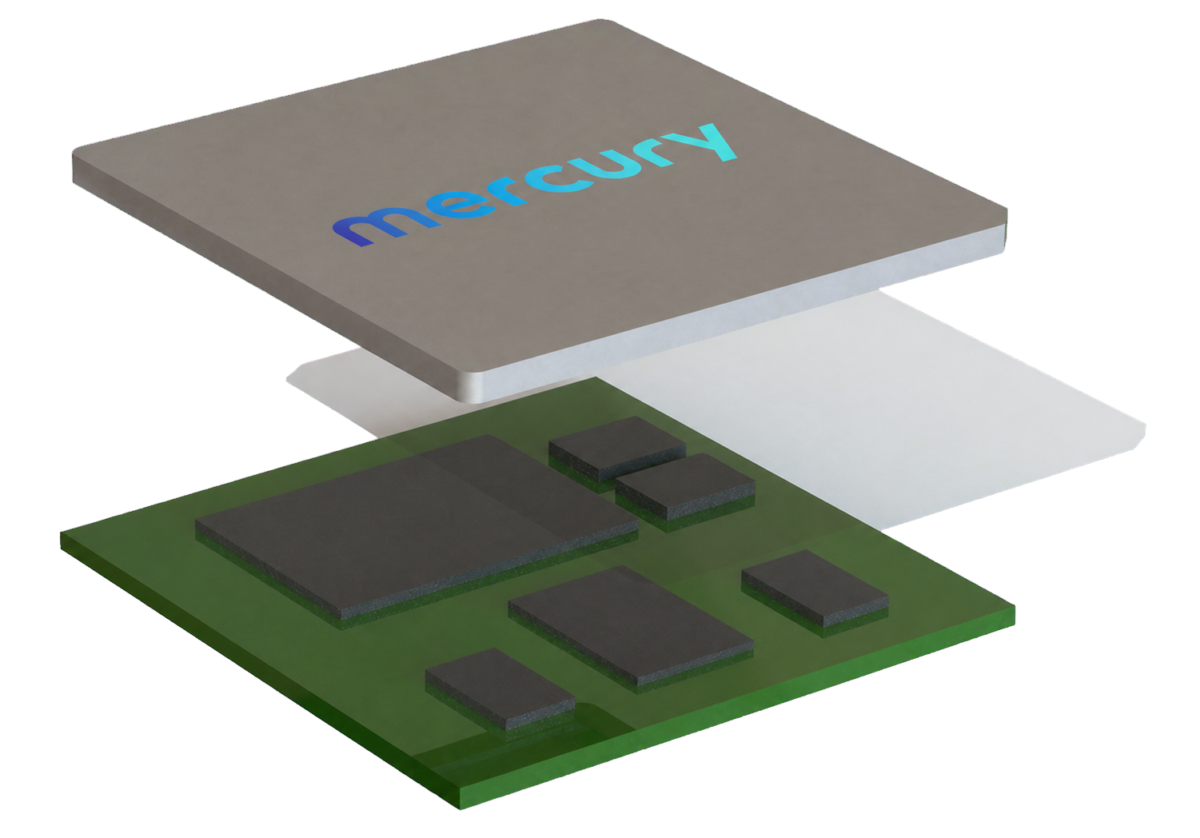
RFSiP Solutions
Mercury RFSiP solutions integrate high-speed RF data conversion, adaptive processing, memory and power management in a compact package. Verify channel count, bandwidth, latency and SWaP-C requirements by program.
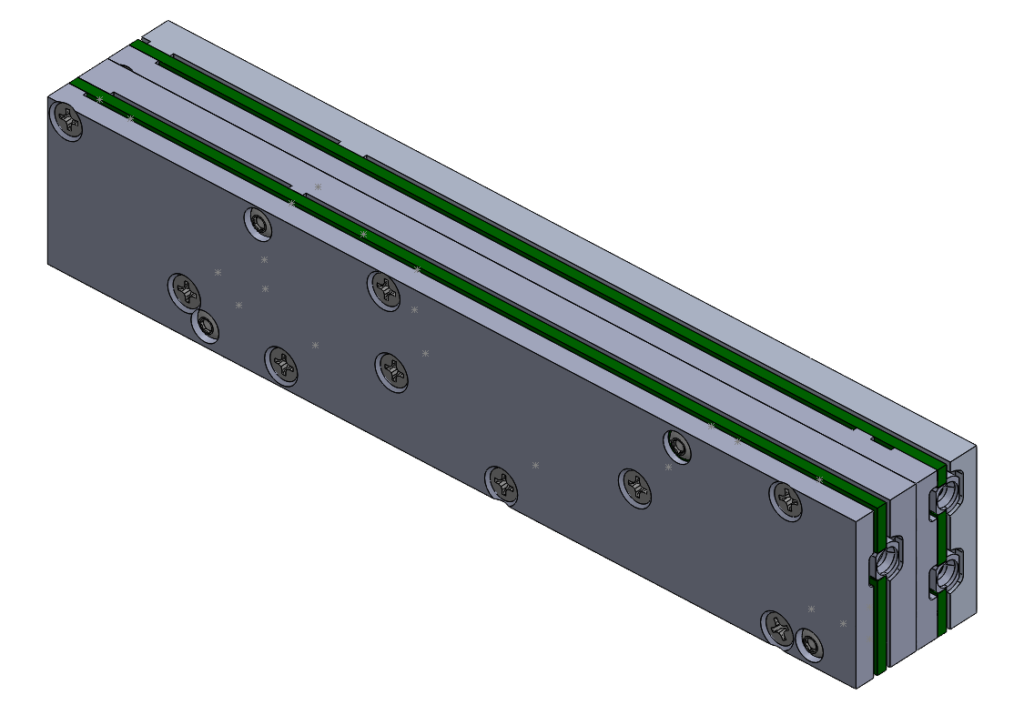
AM9057 / AM9058 Tuner Modules
The AM9057 downconverter and AM9058 upconverter form a matched, phase-coherent RF conversion pair for 0.9–18 GHz operation. A shared-LO option and compact board-mount design support dense multichannel systems.

LAD-2150 Large Area Rugged LCD Module
The LAD-2150 is a 21.5-inch, 10-bit rugged LCD module. Sunlight readability, day/night modes and MIL-STD-3009 Class B NVIS compatibility support clear viewing on demanding platforms.
From RF requirement to operator display: five technical decisions
Use this flow to evaluate the four solutions within one system architecture rather than as isolated products.
- 01 · Requirement
Define the requirement
Set operating band, channel count, bandwidth and platform conditions.
- 02 · Frequency conversion
Move the signal to the right frequency
Define up/downconversion, shared LO and channel-density needs for AM9057/AM9058.
- 03 · Direct RF
Digitize the signal directly
Compare Versal RF and RFSiP approaches by sample rate, channel architecture and latency target.
- 04 · Edge processing
Process data at the edge
Match DSP, AI Engine, I/O and data-flow requirements to the mission workload.
- 05 · Display
Present information to the operator
Verify screen size, video interface, day/night use and environmental conditions by platform.
This diagram is conceptual; product and configuration suitability must be verified by model and project.
Solutions focused on radar, electronic warfare and SATCOM
Evaluate the featured Mercury solutions against the technical demands of radar, electronic warfare and SATCOM missions.
Radar and AESA systems
Use Versal RF and RFSiP to evaluate wideband sensing, multichannel digitization and low-latency processing within one architecture.
Electronic warfare and signals intelligence
Pair the AM9057/AM9058 tuner set with Direct RF processing to plan channel density and SWaP-C targets across wideband receive/transmit chains.
SATCOM and mission systems
Consider RF conversion and processing together with rugged display options to clarify platform I/O and operator visualization requirements.
Do Versal RF and RFSiP describe the same solution?
Direct RF describes an architectural approach to bringing RF signals into the digital domain, not a single product format. Mercury's DRF2380 SoM provides AMD Versal RF-based conversion and processing resources at board level. The RFS1140 RFSiP combines an AMD Versal AI Core adaptive SoC, Jariet data converters, memory and power functions through a multichip-package approach.
The choice therefore involves more than physical size. Development tools, RF connections, thermal design, digital data outputs and integration level must be considered together. RFSiP and Versal RF should not be assumed to mean the same silicon or drop-in interchangeable components.
SoM, small form factor or 3U VPX?
| Model | Format | Initial evaluation question |
|---|---|---|
| DRF2380 | System-on-Module (SoM) | How will a standard or custom carrier integrate the module into our platform? |
| DRF4380L | Small form factor (SFF) | Do mechanical space, connections and cooling arrangements fit this format? |
| DRF5380 | 3U VPX | Are the chassis, backplane, power and data paths compatible with the selected board? |
This table is not a performance ranking. Products in one family do not necessarily share every electrical, mechanical or qualification characteristic. Use Mercury's model table to reach the current documentation for the selected product. Apply SOSA and other conformance statements only to the model and scope identified by the manufacturer.
Why are sample rate and instantaneous bandwidth different?
Sample rate is the number of samples a converter captures or generates per second. Analog input bandwidth describes the RF input chain's frequency coverage; instantaneous bandwidth describes the spectrum that a particular configuration can process simultaneously. These quantities are not interchangeable. A converter's rate alone does not prove that the complete system can process an equivalent bandwidth without data loss.
- Specify operating frequency and simultaneous observation bandwidth separately.
- Define channel count, common-clock requirements and phase coherence.
- Plan the processing algorithm, latency target, data output and recording requirements together.
- Validate power, cooling, environmental conditions and platform interfaces for the selected model.
AM9057/AM9058 address frequency conversion, while LAD-2150 addresses operator display requirements; they do not replace Direct RF processing modules. Explore the wider portfolio on the TARGET Mercury Systems page.
Select the Mercury solution around your technical need
Share your operating band, channel count, sampling and latency targets, form factor and display requirements so we can identify the relevant product family and next technical step.



