


QNX
QNX provides microkernel-based operating systems, development platforms, and virtualization solutions for real-time, secure, and mission-critical embedded systems. Its portfolio spans the general-purpose QNX Software Development Platform 8.0 and separately certified QNX OS for Safety and QNX Hypervisor for Safety products. TARGET A.Ş. is the local technical point of contact in Türkiye for platform selection, hardware compatibility, and software-architecture assessment.
An embedded-development foundation with a microkernel operating system, tools, libraries, and BSPs.
A certified operating system and certification artifacts for safety-critical systems.
Virtualization that combines guest systems such as QNX, Linux, and Android in separated domains on one SoC.
Six QNX solutions from RTOS foundations to cloud and SDV integration.
Selection considers the target SoC, real-time and safety scope alongside developer access, pre-integrated SDV software, and cloud-based workflows.
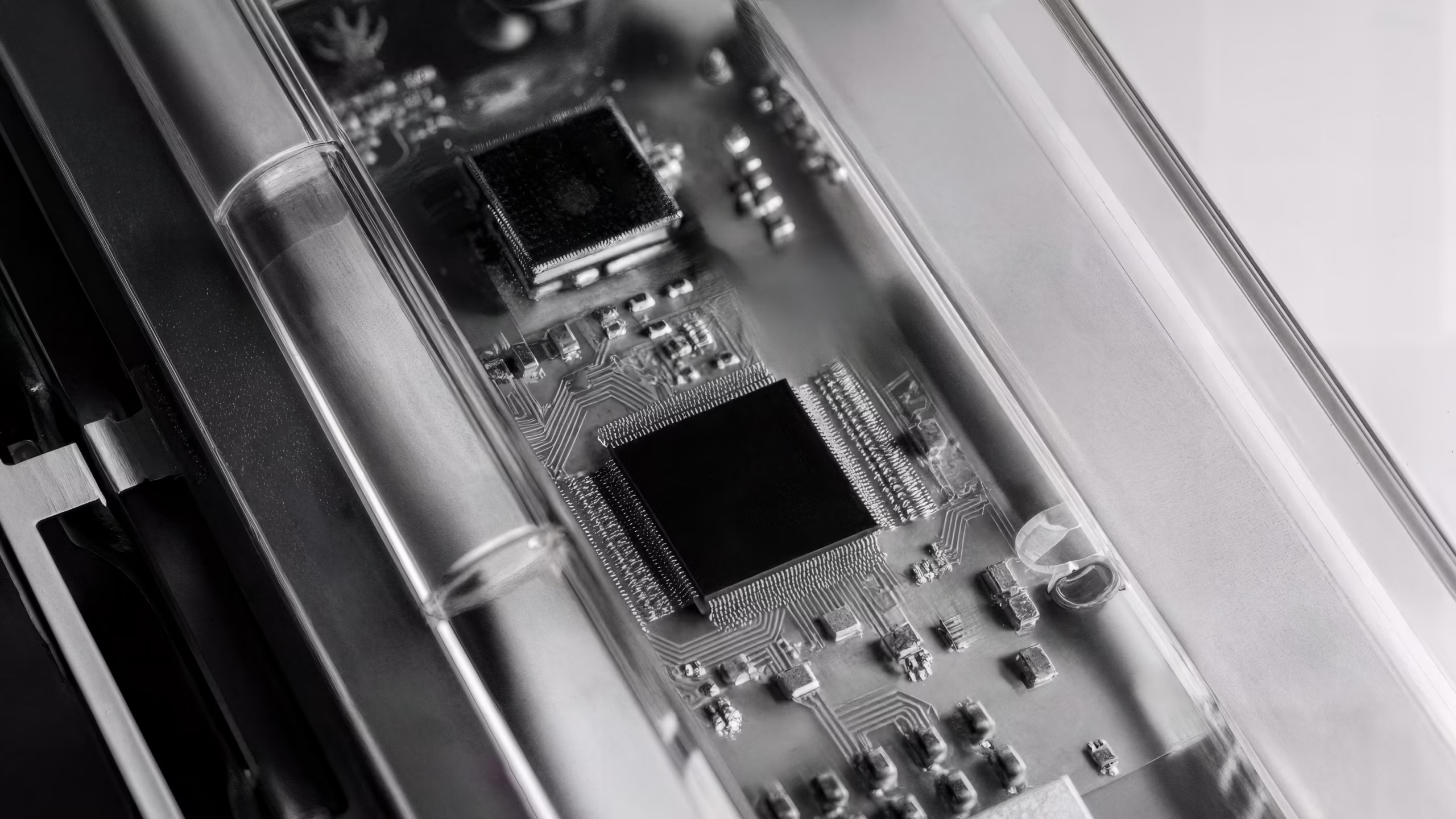
QNX SDP 8.0
A next-generation microkernel RTOS, toolchain, and development platform for high-performance, safety-ready embedded systems.
- QNX OS 8.0 microkernel architecture
- BSP ecosystem for Arm and x86 targets
- Foundation for QNX OS and Hypervisor products
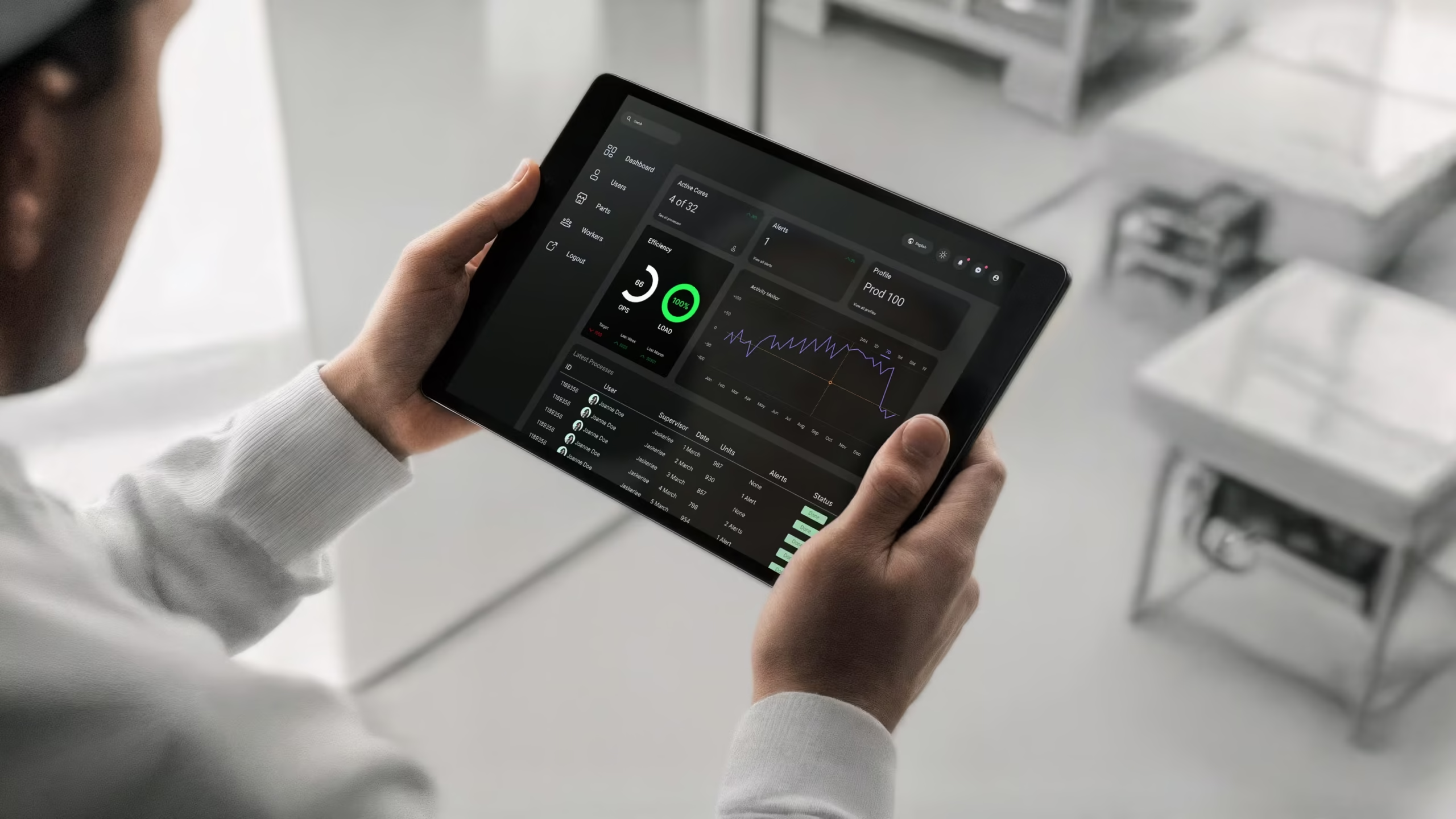
QNX OS for Safety 8.0
A certified microkernel-based operating system for products that require functional safety and cybersecurity.
- ISO 26262 ASIL D certification scope
- IEC 61508 SIL3 and IEC 62304 Class C scope
- Safety and Security Manual artifacts

QNX Hypervisor 8.0
An embedded virtualization platform that runs operating systems of different criticality levels on one SoC with strong isolation.
- QNX, Linux, and Android guest domains
- Resource and device isolation
- Separate Hypervisor for Safety variant for safety requirements

Alloy Kore™
Co-developed by QNX and Vector, this modular SDV platform pre-integrates QNX operating-system and virtualization technologies with Vector middleware.
- Pre-integrated QNX and Vector software foundation
- Common modular architecture across ECU types
- Designed to reduce integration effort

QNX Everywhere
A program that gives students, hobbyists, and individual prototypers free access to QNX SDP 8.0, development tools, and learning resources for non-commercial use.
- Free QNX SDP 8.0 access for non-commercial use
- Ready-made QNX SDP 8.0 image for Raspberry Pi 5
- Codelabs, training, and community resources

QNX Accelerate on AWS
A QNX initiative that makes supported QNX OS and Hypervisor environments available as AWS cloud targets for earlier development, CI/CD, and scalable validation.
- Arm64 development and testing on AWS
- Binary parity with corresponding Arm64 targets
- Final validation remains on target hardware

Solution architecture
From hardware target to a verifiable software platform.
In a QNX-based architecture, hardware, the operating system, workload separation, and safety evidence are evaluated within the same program requirements.
01 / TARGET
Define the SoC and mission profile
Specify processor architecture, BSP, real-time workload, I/O, memory, and performance requirements.
02 / BASELINE
Select SDP or the Safety OS baseline
Separate the general development foundation from operating-system scope that requires functional-safety certification.
03 / ISOLATE
Partition workloads and domains
When multiple operating systems are required, define guest domains, device access, memory, and scheduling boundaries.
04 / VERIFY
Validate integration on target hardware
Verify BSPs, drivers, timing behavior, fault isolation, and required certification artifacts on the actual hardware.
Why QNX?
QNX brings real-time operating systems, safety-certified variants, and embedded virtualization together on a common microkernel architecture.
Microkernel-based isolation
Separation of system services supports controlled fault boundaries and configuration of mission-critical software components.
Clear separation of general and safety scope
SDP 8.0 is a safety-ready development foundation; certification claims apply only to QNX OS for Safety and the relevant Safety variants.
Mixed operating-system architectures
QNX Hypervisor helps combine operating systems and criticality levels in separated domains on a single SoC.
QNX RTOS, functional safety, and embedded virtualization
QNX Software Development Platform 8.0 provides an operating system, BSPs, toolchain, and libraries for high-performance real-time embedded software development. QNX OS for Safety 8.0 has a separate certification scope for systems that require functional safety.
QNX Hypervisor 8.0 combines multiple operating systems in isolated domains on one SoC. When certified virtualization is required, the scope of QNX Hypervisor for Safety and supported target hardware must be verified separately.
QNX platform selection and integration support in Türkiye
TARGET A.Ş. provides local technical support in Türkiye for QNX target-hardware and BSP assessment, RTOS and Hypervisor product selection, operating-system architecture, and integration planning. Safety certifications, guest-operating-system support, and SoC support are verified against the current documentation for the selected product release.



