


HarshCam 9520L vs 9500LRugged camera selection guide
TARGET TechNews · Updated
HarshCam 9520L and 9500L combine Sony FCB imaging cores with ruggedized camera-block construction. Compare installation space, sensor size, video interfaces and environmental requirements to shortlist the right visible-imaging channel, then verify the camera, interface board and enclosure as separate parts of the configuration.
Maintain image clarity in demanding environments
HarshCam is engineered for conditions where high vibration and impact can disrupt zoom and focus. Internal mechanical reinforcement keeps the image stable while preserving the Sony FCB form factor, connections and control architecture, allowing you to move to a more rugged camera channel without redesigning the existing platform.
The operating range from freezing cold to high temperatures helps maintain stable imaging performance in changing field conditions.
Reinforced to withstand impacts above 40G, the structure keeps zoom and focus in place on mobile platforms.
The same Sony FCB form factor and control architecture accelerate the move to HarshCam without changing the existing design.
The −35°C / +71°C range applies only to the HarshCam (±) series. Vibration, mechanical shock, high-temperature and low-temperature testing under MIL-STD-810 must be verified using the current datasheet and test report for the relevant model.
HarshCam-9520L and 9500L: two platforms, the same rugged foundation
Choose the 9520L when compact integration and strong low-light performance lead the requirement; choose the 9500L when a larger sensor and enhanced stabilization matter most. Both series can be configured with the (±) option for an extended operating-temperature range.
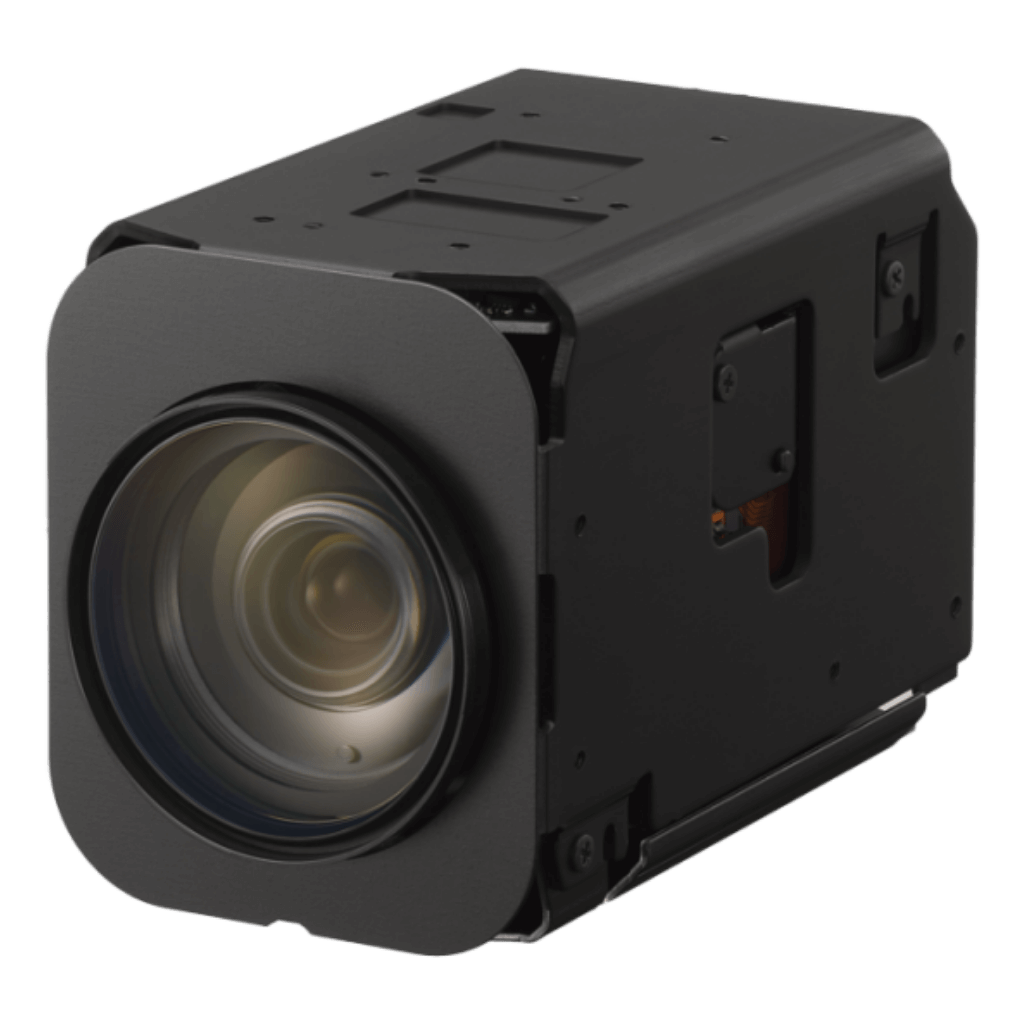
HarshCam-9520L / 9520L (±)
Compact packaging, 30× optical zoom and STARVIS 2 low-light performance come together for mobile EO payloads where size and weight are critical.
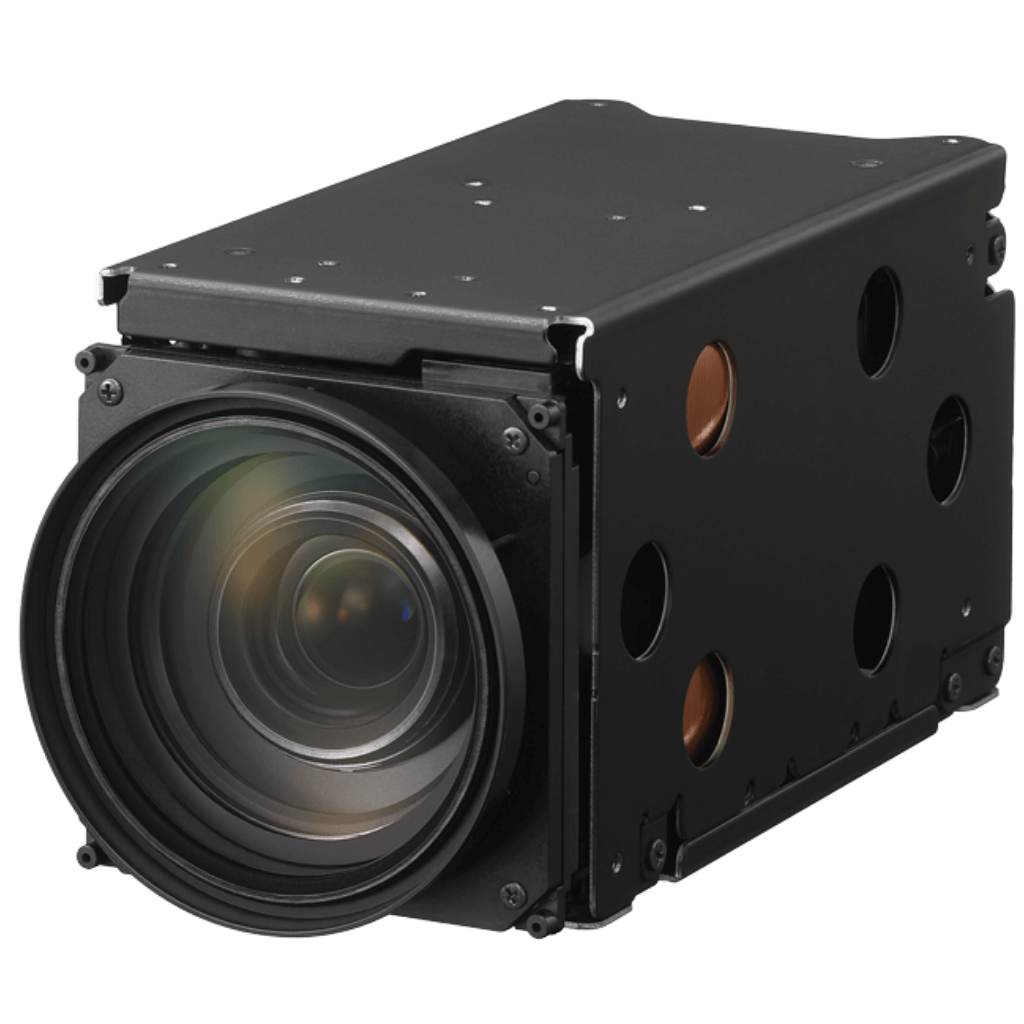
HarshCam-9500L / 9500L (±)
A 1/1.8" sensor, 30× enhanced optical zoom and Super Image Stabilizer deliver steadier, more detailed long-range imaging on mobile platforms.
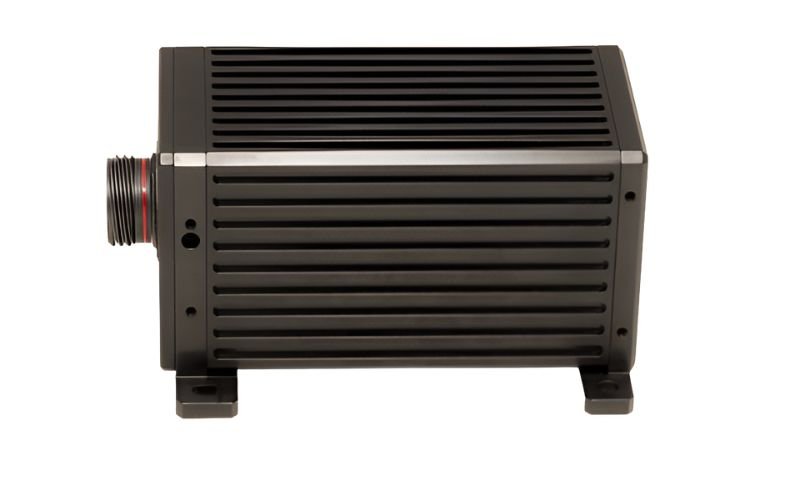
Prepare HarshCam-9520L for field deployment with CamShell
CamShell combines a protective housing with power and video connectivity, preparing HarshCam-9520L and 9520L (±) camera blocks for standalone field integration.
Explore CamShellWhere does HarshCam make the difference?
RWS, Turrets and Stabilized Gimbals
Maintains zoom and focus through vibration and sudden movement, keeping the target image stable.
Land and Unmanned Platforms
Reduces motion-related image loss on armored vehicles, UGVs and UAVs while providing operators with a dependable visible zoom channel.
Surveillance Systems
Long-range visible zoom helps operators assess distant targets with greater detail in border and critical-infrastructure surveillance.
Should you choose HarshCam 9520L or 9500L?
Zoom ratio alone does not determine the right camera. The product cards above summarize the specifications; this checklist translates them into integration decisions. Start with the available installation space, the receiving image-processing system and the task the operator needs to perform. Compare candidates using the same scene and settings rather than unrelated demonstration images.
| Priority | Initial candidate | What to verify |
|---|---|---|
| Limited installation space | The compact 9520L-based camera block | Body dimensions, connector access, cable clearance and installed mass. |
| A larger sensor | The 9500L with its 1/1.8-type sensor | Field of view, target detail and image performance at the intended exposure. |
| A moving platform | The stabilization settings of both models | The actual vibration profile, zoom setting and stabilization mode's effect on the image area. |
The Sony FCB-EV9520L and FCB-EV9500L documentation describes the imaging core. Verify HarshCam ruggedization and extended-temperature options separately against the selected model's documents. Do not substitute a standard Sony block's operating range for the HarshCam (±) specification, or vice versa.
How do LVDS video and VISCA control connect to IP or SDI systems?
Video output and camera control perform different jobs. LVDS carries image data; VISCA handles camera commands such as zoom and focus. These interfaces do not make the bare camera block a self-contained IP camera or a direct SDI source.
Document the chain as separate items: camera block, a compatible interface board or encoder where needed, power and control connections, and a protective enclosure. The manufacturer's CamShell description names compatibility with 9520L and 9520L (±); do not assume this also covers 9500L. For IP, SDI, HDMI or USB requirements, confirm the board model, output format and supported camera controls.
Does a DORI detection distance mean identification at that distance?
No. DORI separates detection, observation, recognition and identification into different visual tasks. Seeing that a target is present is not the same as identifying it or resolving a particular detail. Read the manufacturer's DORI explanation alongside the target type, distance, field of view and zoom setting. A distance figure should not be treated as a field-performance guarantee without the lighting, visibility and processing conditions.
What should a technical evaluation request include?
- Target type, required detail and day/night operating scenario.
- Video format, frame rate, receiving controller and acceptable latency.
- Installation drawing, power supply, cable routing and enclosure needs.
- Shock, vibration and temperature requirements, with test methods and acceptance criteria.
For enclosure options and related visible-imaging solutions, visit TARGET's Iberoptics solution page. With these requirements documented, contact TARGET for a technical review. Keep the camera, interface and enclosure as separate verification items when defining the complete configuration.
Explore the HarshCam product family in greater detail
Evaluate the model that fits your platform type, target distance, video interface and environmental conditions, and configure a rugged visible camera channel with the HarshCam product family.



