


Labradar
Labradar develops Doppler-radar chronographs for measuring the velocity of bullets and other compatible projectile types without physical contact. The current Labradar LX combines a compact enclosure, internal rechargeable battery, integrated memory, and mobile-app connectivity in one instrument. TARGET A.Ş. is the local technical point of contact in Türkiye for assessing use case, velocity range, triggering, data recording, and field accessories in the appropriate configuration.
Radar-based measurement reduces dependence on lighting conditions and the precise axis alignment required by photoelectric chronographs.
Maximum, minimum, and average velocity, standard deviation, and extreme spread can be assessed for each series.
Integrated memory, Bluetooth, and the mobile application support viewing and exporting measurement series.
Three complementary layers for ballistic velocity measurement.
Device selection considers projectile type, expected velocity range, triggering method, records, and the mobile-data workflow together.
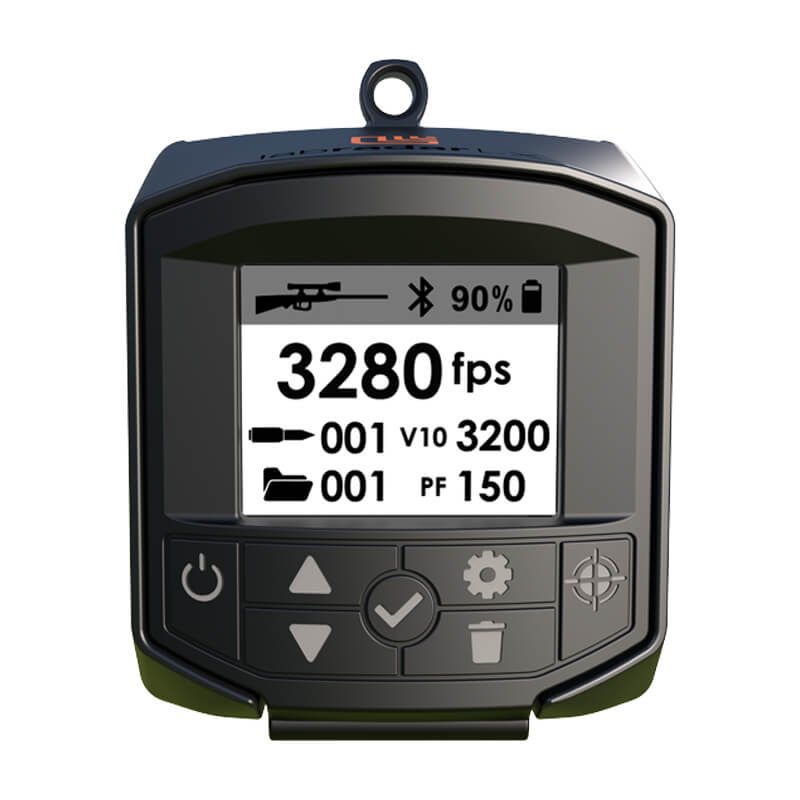
Labradar LX
Labradar LX combines 60 GHz Doppler radar, a compact aluminium enclosure, internal rechargeable battery, and Bluetooth in a portable chronograph.
- Applications spanning rifles, handguns, air guns, bows, and crossbows
- Radar-based measurement in any lighting condition
- Integrated memory and mobile-app connectivity
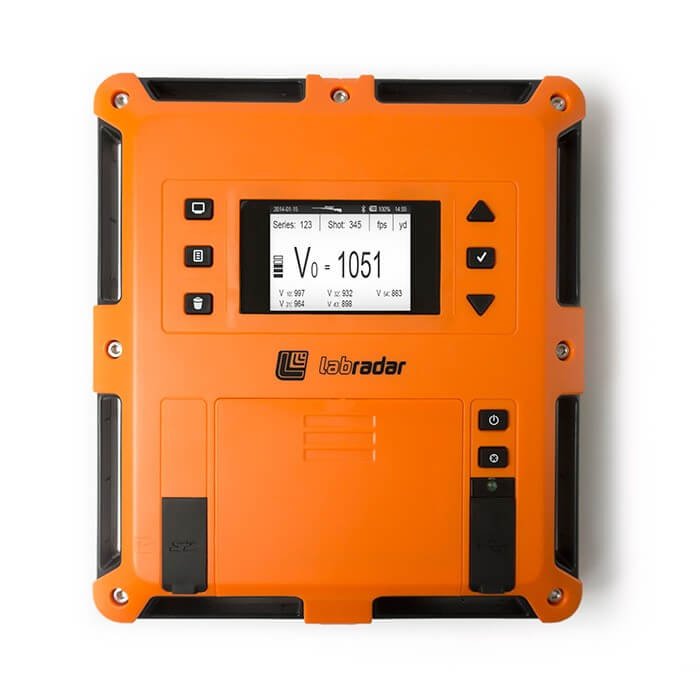
Labradar radar chronograph platform
The Labradar platform supports non-contact projectile-velocity measurement by positioning the instrument beside the shooter and recording velocity-related data.
- Doppler measurement independent of lighting
- Applications across rifles, handguns, and multiple projectile types
- Data access through USB or SD card
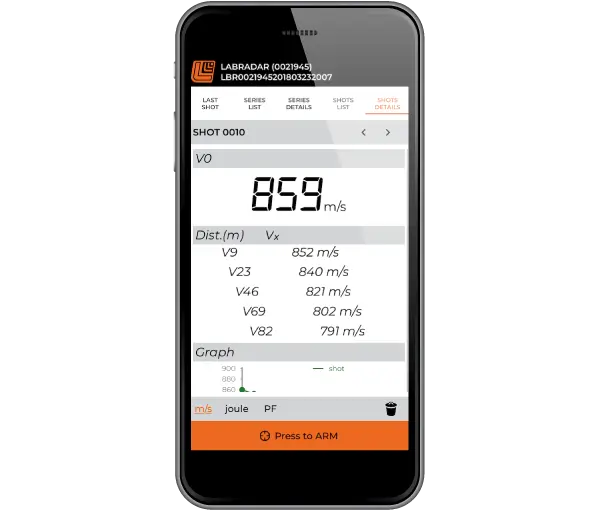
Labradar mobile-data workflow
The mobile application connects to a compatible Labradar instrument over Bluetooth and simplifies viewing measurement series, velocity results, and supported statistics.
- Bluetooth connection to the instrument
- Series and shot-result display
- CSV export for supported data
Solution architecture
From shot event to recorded velocity data.
The Labradar measurement chain covers defining the use case, positioning the radar, processing velocity data, and assessing results on the instrument or mobile application.
01 / DEFINE
Projectile and velocity range
The rifle, handgun, air gun, arrow, or other compatible use case and expected velocity range are defined.
02 / POSITION
Radar and triggering setup
The instrument is positioned beside the shooter toward the target, and the appropriate trigger mode is selected.
03 / MEASURE
Doppler velocity data
Radar returns are processed by the instrument algorithms into shot and series results.
04 / ASSESS
Statistics, records, and transfer
Velocity values, series statistics, and supported export options are assessed on the device or mobile application.
Why Labradar?
Labradar combines Doppler-radar measurement, compact field use, integrated records, and mobile-data access in one ballistic chronograph ecosystem.
Non-contact radar measurement
Velocity can be captured without placing screens or optical gates in the projectile path.
Broad application range
Within the manufacturer’s published compatibility, Labradar LX supports projectile types from rifles to bows and crossbows.
From instrument to mobile analysis
Integrated records, Bluetooth, and app support make it easier to review series results in the field.
Labradar Doppler radar chronographs
Labradar uses Doppler radar to measure projectile velocity without physical contact. This approach reduces the lighting and precise-alignment constraints of conventional photoelectric chronographs while supporting series-based velocity statistics.
The current velocity range, trigger modes, measurement accuracy, projectile compatibility, and data-transfer functions must be confirmed in the published technical documentation for the selected Labradar model.
Labradar configuration and technical support in Türkiye
TARGET A.Ş. provides local technical assessment in Türkiye to match the use case, expected velocity range, triggering, field installation, mobile connectivity, and accessory requirements to Labradar instrument and software options.



