



Acutronic iMPULSE™ X-Wings35™ Vibration and shock test selection.
TARGET TechNews · Updated
The Acutronic iMPULSE™ X-Wings35™ family includes eight standard air- and water-cooled electrodynamic shaker models from 40 to 300 kN. Select a vibration and shock test system by evaluating force rating alongside the test profile, specimen and fixture mass, motion limits and laboratory infrastructure.

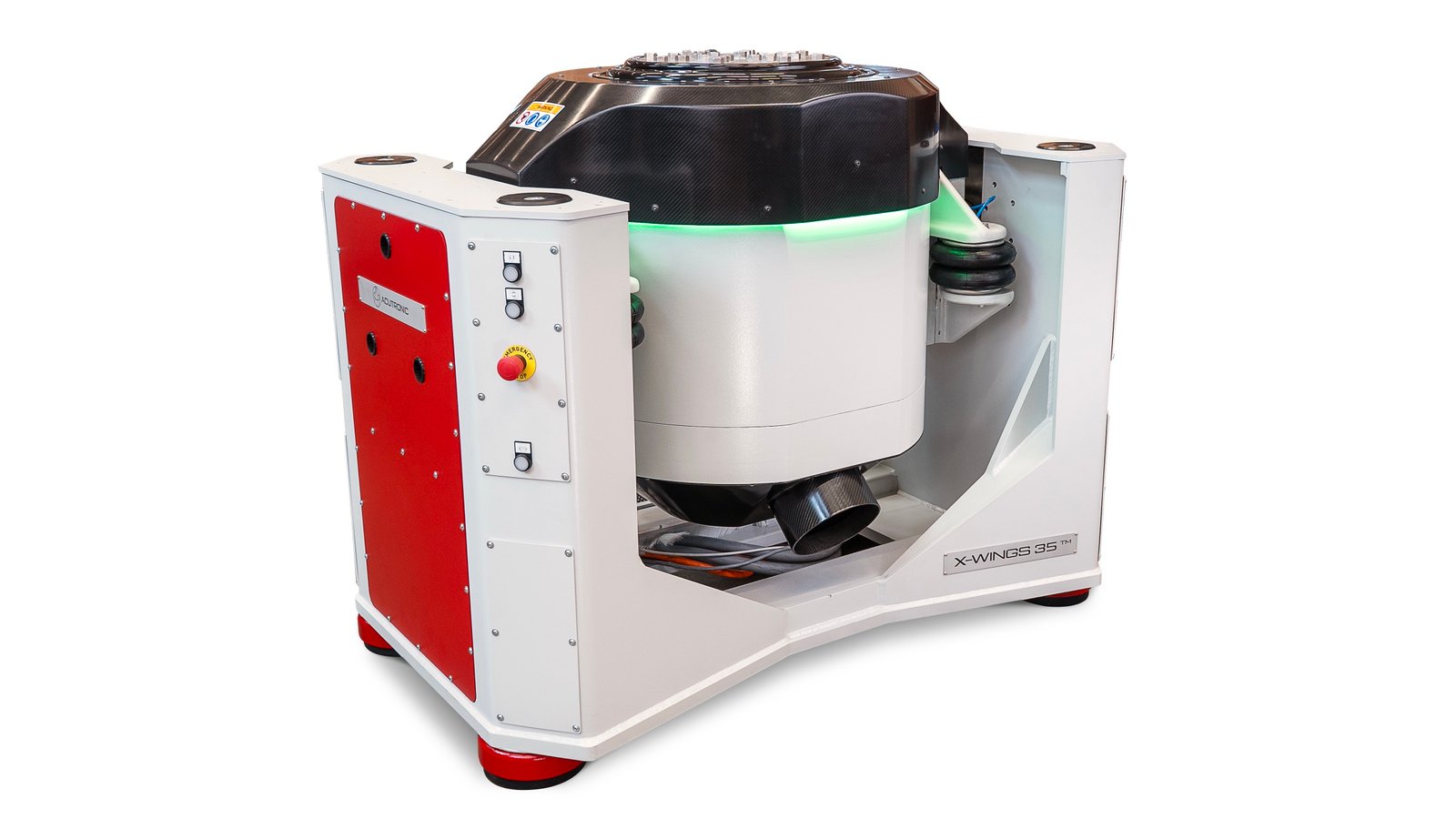
Eight standard models from 40 to 300 kN.
Within the X-Wings35™ range, the 40 and 60 kN models are air-cooled, while models from 70 to 300 kN are water-cooled. Frequency range and static payload capacity vary by model, so the system is selected against the required test profile and available laboratory infrastructure.
Sine and random force ratings across eight standard models.
Maximum specified shock force for the 300–650W model.
Potential energy-cost savings stated in Acutronic product data.
Values vary by model and test profile. Final performance is confirmed against the selected system configuration.
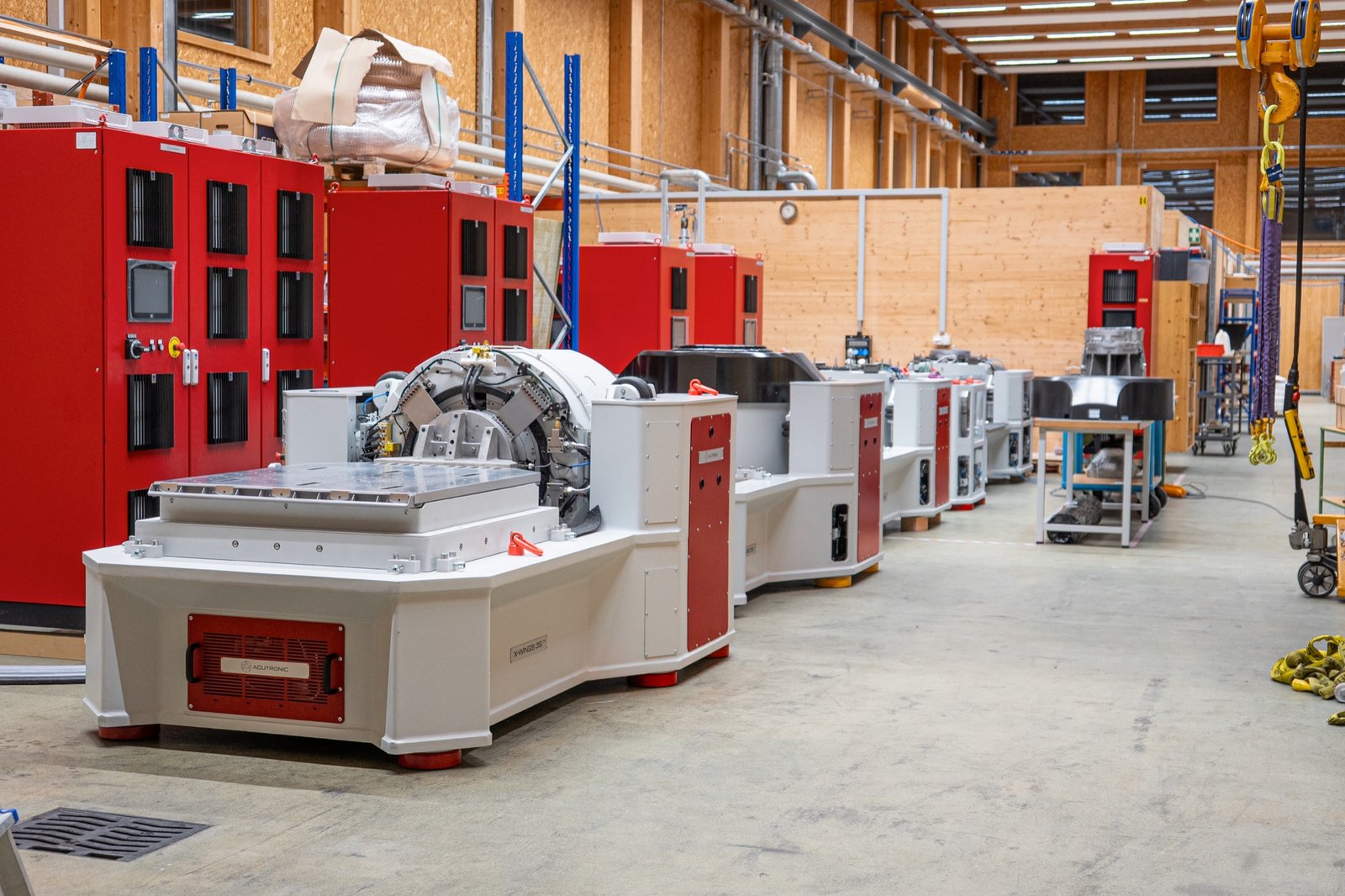
The shaker is selected as part of the complete test cell.
An X-Wings35™ configuration is defined by considering the test axis, slip table, power and control system, and laboratory layout together. The shaker model and supporting equipment are then matched to the test requirement.
- Shaker system
- Horizontal and vertical testing
- Power and control systems
X-Wings35™ electrodynamic shaker configurations.
System selection considers the test profile, specimen and fixture mass, test axis, displacement, velocity, slip table and climatic chamber requirements together.
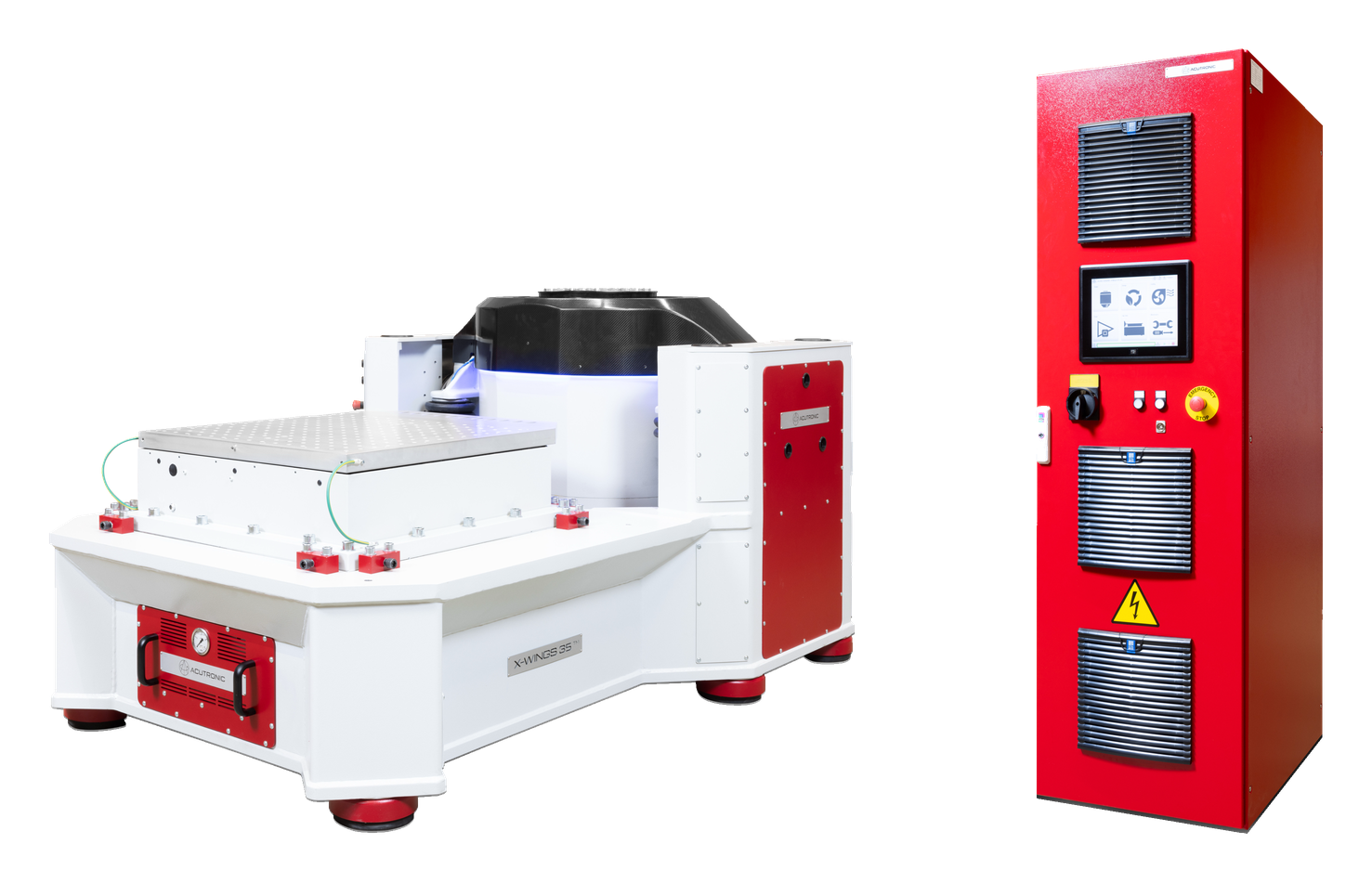
40 and 60 kN air-cooled models.
Two standard models offer a streamlined cooling arrangement for vibration testing at component and subsystem level.
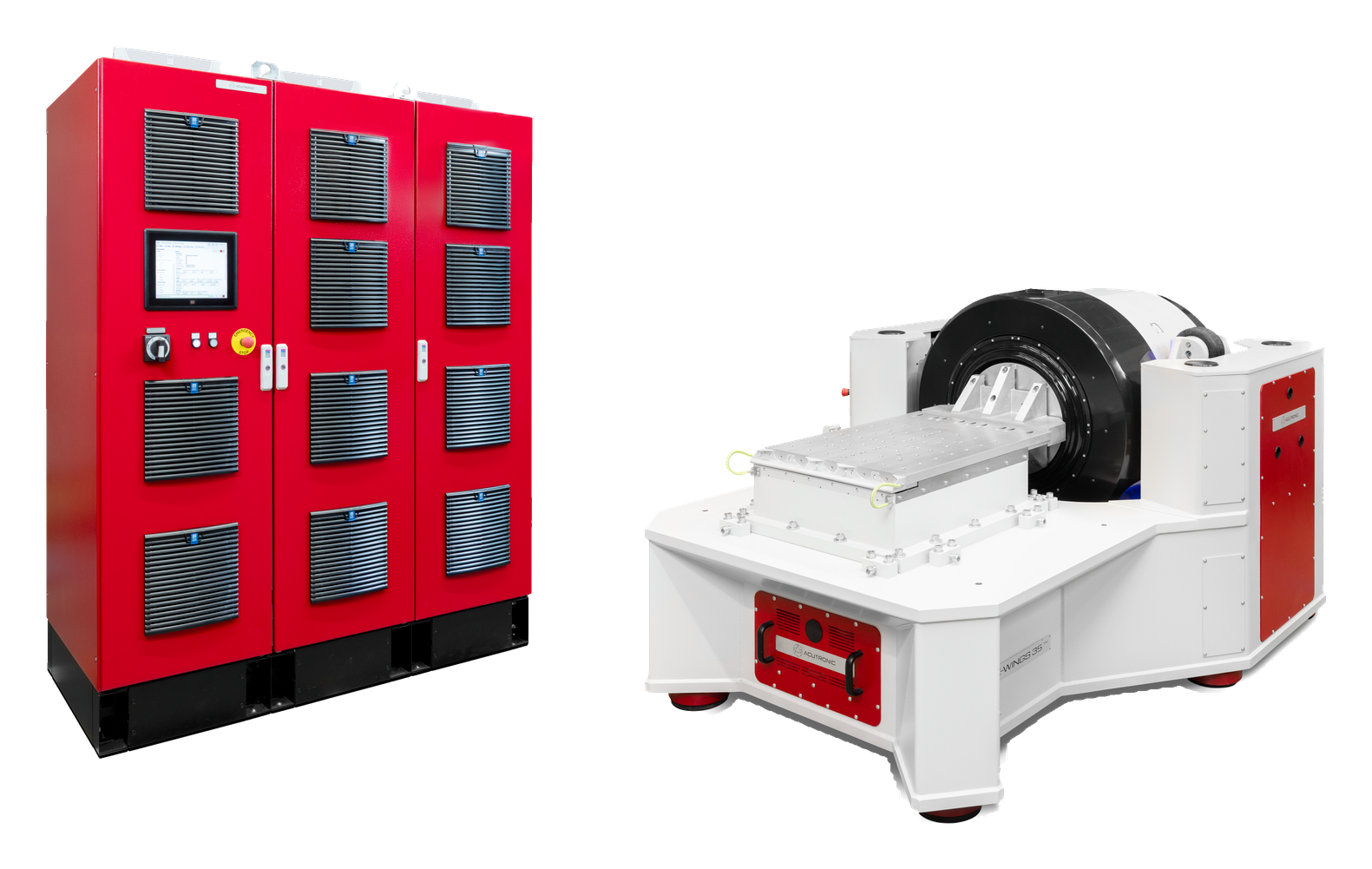
70–300 kN water-cooled models.
Six standard models provide a choice of force ratings for horizontal and vertical vibration tests with heavier specimens and fixtures.
Control and data functions are integrated into the test system.
X-Wings35™ systems support day-to-day test operations through the AcuVibe Commander interface, PLC-controlled alignment and real-time data logging.
System status and interlock information are available through the graphical PLC interface.
PLC-controlled centring of the shaker body and armature supports repeatable setup.
The IoT-ready architecture provides a foundation for data capture and traceability.
Applications for X-Wings35™ vibration test systems.
X-Wings35™ systems can be configured for defence and aerospace, battery and e-mobility, automotive and rail applications, as well as test laboratories. The standards shown below are examples referenced in the product documentation.
Defence and aerospace
Vibration and shock testing for avionics, mission electronics and subsystem qualification.
Batteries, automotive and rail
Mechanical environmental testing for lithium-ion batteries, electric vehicle systems and rail components.
Test laboratories
New test capability can be planned alongside performance verification, maintenance, repair, spare parts and training services.
References to standards do not imply automatic compliance or certification. The test profile and system configuration are verified for each project.
Is the kN rating enough to select an X-Wings35?
No. Force rating is a starting point; selection depends on the test profile applied to the loaded setup. Read the air- and water-cooled model comparison above alongside the specimen, fixture and moving assembly requirements. A static payload rating does not mean that the same mass can be tested at the system's maximum stated acceleration.
| Published parameter | What it describes | Check before requesting a quotation |
|---|---|---|
| Static payload | Static load-carrying capacity. | State specimen and fixture mass separately from the dynamic test profile. |
| Sine / random / shock force | Force ratings for different excitation types. | Match RMS or peak definitions, waveform and datasheet footnotes. |
| Velocity and displacement | Separate constraints on profile feasibility. | Review frequency, pulse duration and sustained operating conditions. |
| Table and supporting equipment | Specimen mounting and test-axis arrangements. | Provide fixture geometry, centre of gravity and any guidance requirements. |
The X-Wings35 family document lists sine, random, half-sine shock, static payload and supporting equipment separately. Do not combine these into one “maximum capacity.” Load assumptions in the 40–400A model datasheet also show that ratings carry specific test conditions; they cannot simply be transferred to another model or profile.
What infrastructure should the laboratory prepare?
After considering air or water cooling, plan the complete test cell rather than only the shaker footprint. Identify the shaker, power cabinet, cooling equipment, control area and specimen-handling route on the layout. Include maintenance access and the intended horizontal/vertical arrangements in the review.
- Check electrical supply and power infrastructure against the selected model's installation requirements.
- Review cooling connections, ambient conditions and noise management with the facilities team.
- Verify floor, placement, lifting and access requirements using the manufacturer's installation information.
- Include interlocks, emergency-stop arrangements and interaction with adjacent equipment in the scope review.
How do you turn a test profile into a quotation brief?
Send the applicable method, revision and profile, not only the standard's name. For sine testing, provide the frequency/acceleration schedule; for random testing, the PSD profile and duration; for shock, the waveform, peak acceleration and pulse duration. Keep the test sequence for each axis and the acceptance criteria in the same brief.
Add specimen dimensions and mass, the fixture drawing, attachment points and centre of gravity. List slip table, head expander, controller/software, sensors and climatic-chamber integration separately. Mark each item as existing, newly required or optional. Mentioning equipment in the brief does not establish that it is included in the quotation.
Visit TARGET's Acutronic page for related system and support information, or request a technical review with your requirements file. A reference to a test standard does not automatically certify the shaker or the specimen; applicability and verification scope must be established for the project.
Let’s identify the right X-Wings35™ model for your test profile.
Share the target standard, specimen and fixture mass, and test profile. TARGET can support the selection of the appropriate X-Wings35™ model and supporting equipment.



